Directed by: Francis Lawrence
IMDb link: The Hunger Games: The Ballad of Songbirds & Snakes (2023)
“Snow always lands on top.”
Warning: Major spoilers ahead for the movie and the book.
The Plot: The Rise of Coriolanus
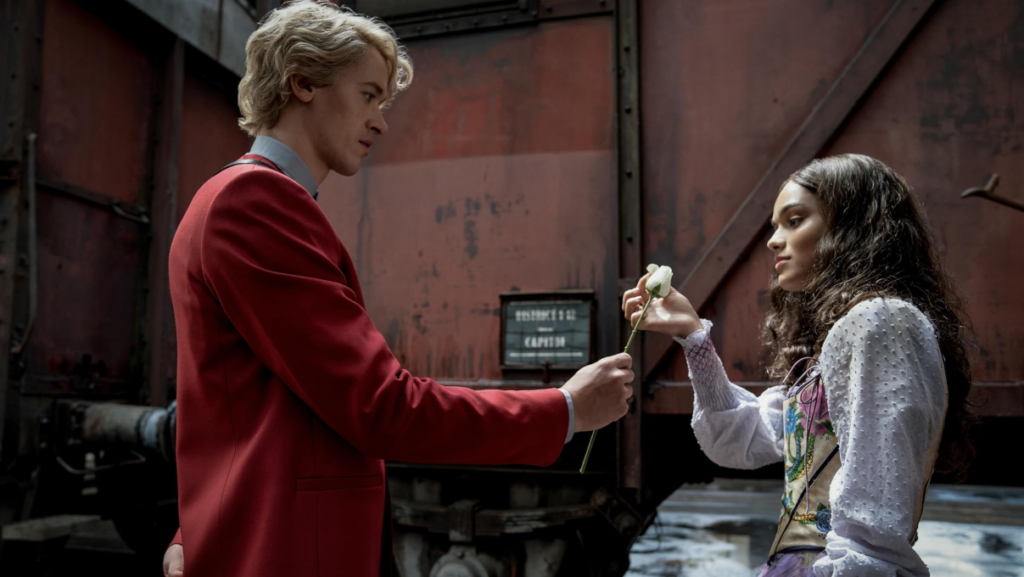
This is the origin story of the villain we love to hate: President Snow. The film takes us back to the 10th Hunger Games, a time when a young Coriolanus Snow (Tom Blyth) was desperate to maintain his family’s legacy and secure a future in the Capitol. He is tasked with mentoring the District 12 tribute, Lucy Gray Baird (Rachel Zegler). If he succeeds, he wins the Plinth Prize… his only ticket to power.
The Format Failure: Why This Needed to Be a Series
I have said it before: 90% of the time, great novels are tough to convert into great movies for one simple reason – the runtime. I often wonder if authors should restrict their adaptations to limited series rather than films, especially in the age of streaming.
There are exceptions, of course. The Hindi movie Kai Po Che (adapted from 3 Mistakes of My Life) stands as one of the best on-screen adaptations I’ve seen. Unfortunately, this film is not one of those exceptions.
Book vs. Movie: A Hollow Adaptation
First things first: I absolutely loved the book. I’ve enjoyed the entire Hunger Games trilogy, but I’ve always felt the movies lacked the detailing and emotional impact of the novels. This prequel, however, was a bigger disappointment because nearly all the core character moments were cut entirely.
Missing the Control Dynamic
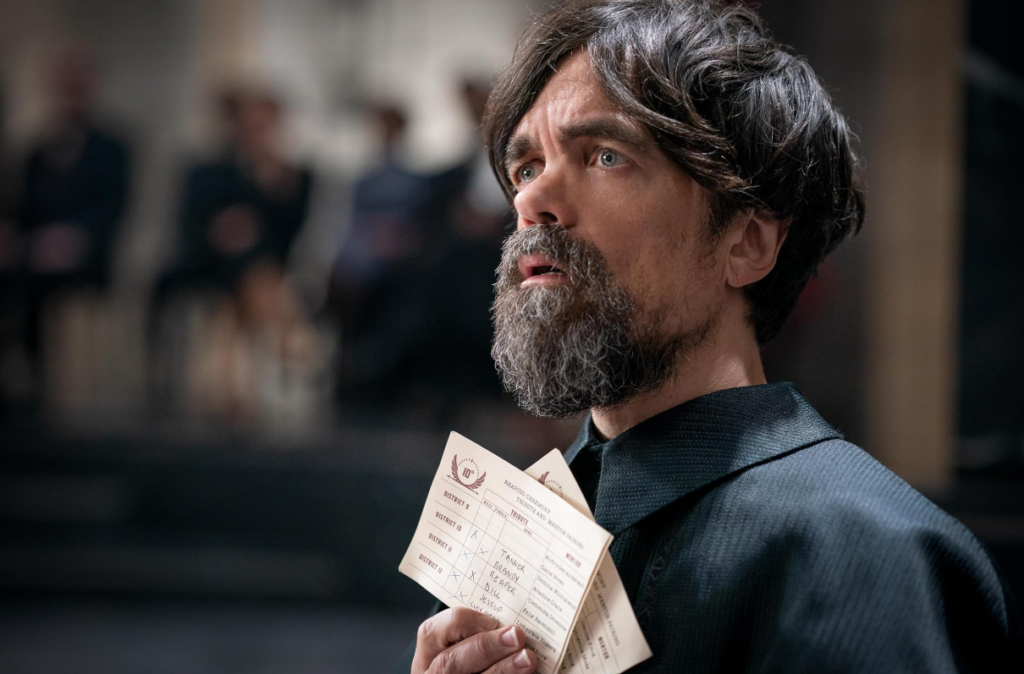
In the book, you feel the constant pressure and “control” Coryo is under during his class sessions with Dr. Volumnia Gaul (Viola Davis) and Dean Casca Highbottom (Peter Dinklage). In the movie, this tension is diluted. Even the laboratory snakes sequence is altered, stripping away the dramatic weight it carried in the text. Worst of all, we never see a single scene of Clemensia after the snake bite… a baffling creative decision.
The Suicide Scene That Lost Its Edge
They completely mishandled the moment where Coryo contemplates suicide. In the book, the despair is real; you genuinely feel he might end it all (even though, as a prequel, you know he won’t). In the movie, the line feels thrown away, spoken without any real weight or darkness.
The Few Things That Worked
If I had to choose one part that stays true to the book, it would be the second chapter, “The Prize”… minus the unnecessary change involving Dr. Gaul and Lucy Gray.
The music also has its moments. The “Hanging Tree” rendition is excellent. However, the connection between Coryo and Lucy isn’t well established, partly because crucial songs were cut. They totally deleted “Keep on the Sunny Side,” which was a mistake. On the bright side, my favorite track, “Can’t Catch Me Now,” is used beautifully in the end credits… though I wish they had used some visuals to make it more impactful.
The Rushed Third Act
The film’s structure is its biggest enemy. The third chapter feels incredibly rushed compared to the first two. You can practically sense the director glancing at his watch, trying to keep the runtime in check without caring how it affects the narrative flow.
The Erased Friendship
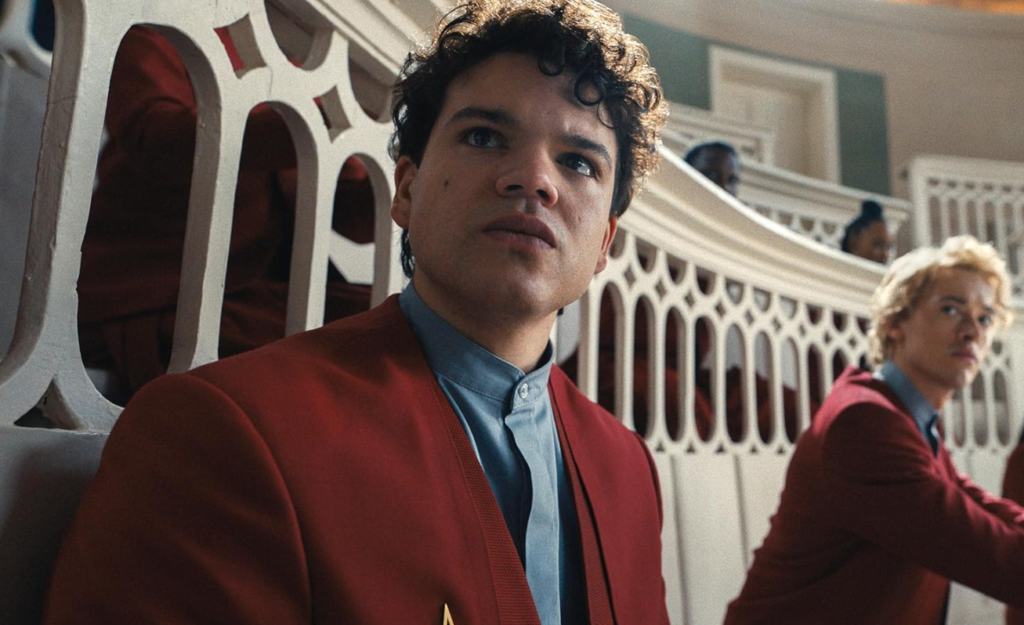
The movie chopped away the scenes where Coryo meets Sejanus Plinth’s (Josh Andrés Rivera) parents. These moments were vital in the book to show how Coryo believes he is like his mother, while his actions prove he is exactly like his father. Without this context, the Coryo-Sejanus friendship falls flat. Coryo comes across as purely cold-hearted, whereas in the book, he was constantly battling an internal moral dilemma.
The Finale: Snow Lands on Top
I did like the lake sequence. It wasn’t as rich as the book, but it captured the chilling atmosphere effectively. The final scene with his cousin Tigris (Hunter Schafer) also hits hard; you can see the shift in her eyes as she realizes who he has become, referring to him by his full name.
The use of the “Snow Lands on Top” theme was excellent, ending with the famous line: “It’s the things we love most that destroy us.” However, the journey to that line wasn’t earned. For book lovers like me, we can connect the dots and appreciate the reference. For everyone else? It probably fell flat.
Final Verdict
Overall, Hunger Games:The Ballad of Songbirds & Snakes has bits and pieces to like, but if you have read the book, you will be terribly disappointed. Even the performance of Tom Blyth, which was quite good, suffers because the script doesn’t allow him to show Coryo’s full complexity.
I am still looking forward to the newly announced book covering the 50th Hunger Games (Haymitch’s year). Hopefully, that adaptation learns from the mistakes of this one.
Rating: 5/10